
Portrait of a Perfumer — Pariscom Magazine
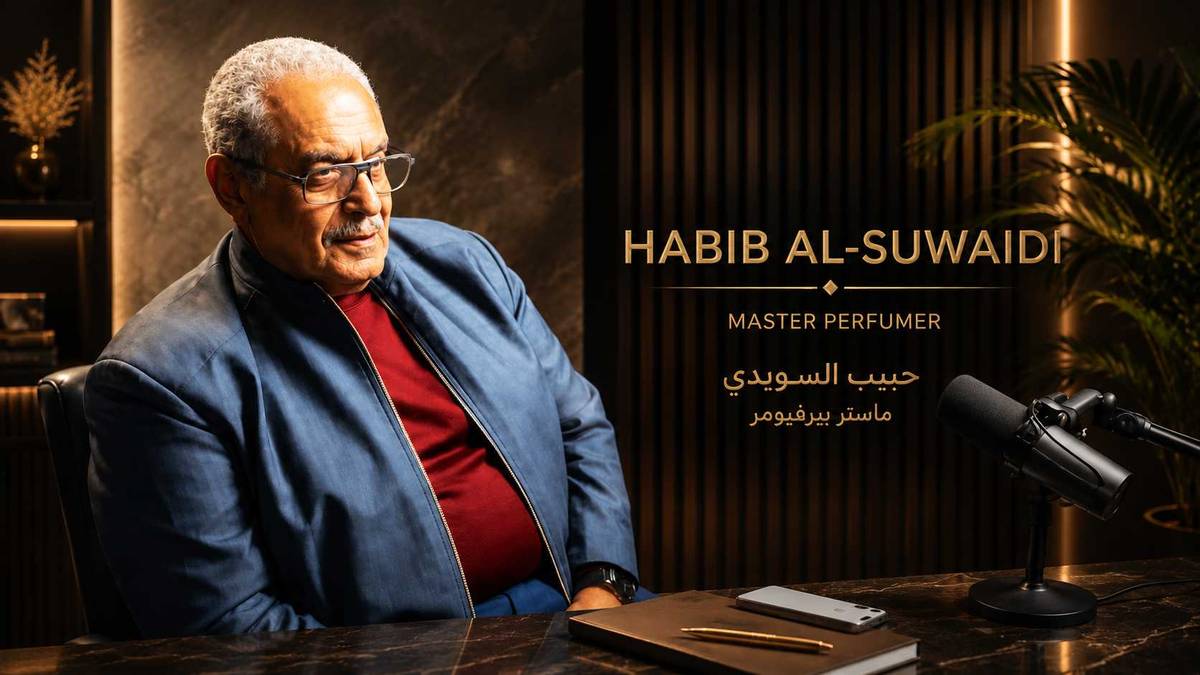
Habib Al-Sowaidi — The Yemeni Who Left His Mark on French Perfumery
Between the mountains of Yemen — bound for centuries to the trade of incense and frankincense — and the most celebrated capitals of fragrance in the world, the journey of Habib Al-Sowaidi stretched across continents, connecting the geography of the East to the history of European perfumery in a rare fusion of authenticity and modernity.
Some men do not choose their passion. Their passion chooses them.
In the city of Taiz, where Yemen's mountains exhale perfume and the air is heavy with jasmine and myrrh, a story began that no one could have predicted. The story of a Yemeni perfumer who carried no monetary fortune in his luggage — only a wealth of sensory memory — and went on to convince Paris, the world's foremost capital of fragrance, that the deepest beauty does not always come from within its borders.
Habib Al-Sowaidi. The name whispered through the corridors of Givenchy and Paco Rabanne and Yves Saint Laurent for decades. The man who restored Ybry to glory after a century of silence. Who built the house of Reine de Saba from the very marrow of history.
His story is not merely a professional journey from one city to another. It is a long expedition revealing how identity can transform into a complete cultural project — how the memory of a childhood garden can become the foundation of a fragrance empire in the heart of Paris.
— A Child in a Garden Beyond Imagination
Great noses are not made in laboratories. They are made in fields.
The Al-Sowaidi family had been cultivating flowers and trees to produce solid frankincense, myrrh, resins, and essential oils since approximately the 1940s. This was not merely a family trade — it was an exceptional sensory environment, akin to a conservatory of scent where Habib received his first education without a single formal teacher.
In Taiz, a city with ideal conditions for the blooming of Sambac jasmine, where lemon trees grow across lush highlands, the child was captivated from his earliest years by aromas that would never leave him.
"When I was a child, I lived in a garden of perfumes. From my earliest years, their scents enchanted me in ways I could never explain." — Habib Al-Sowaidi
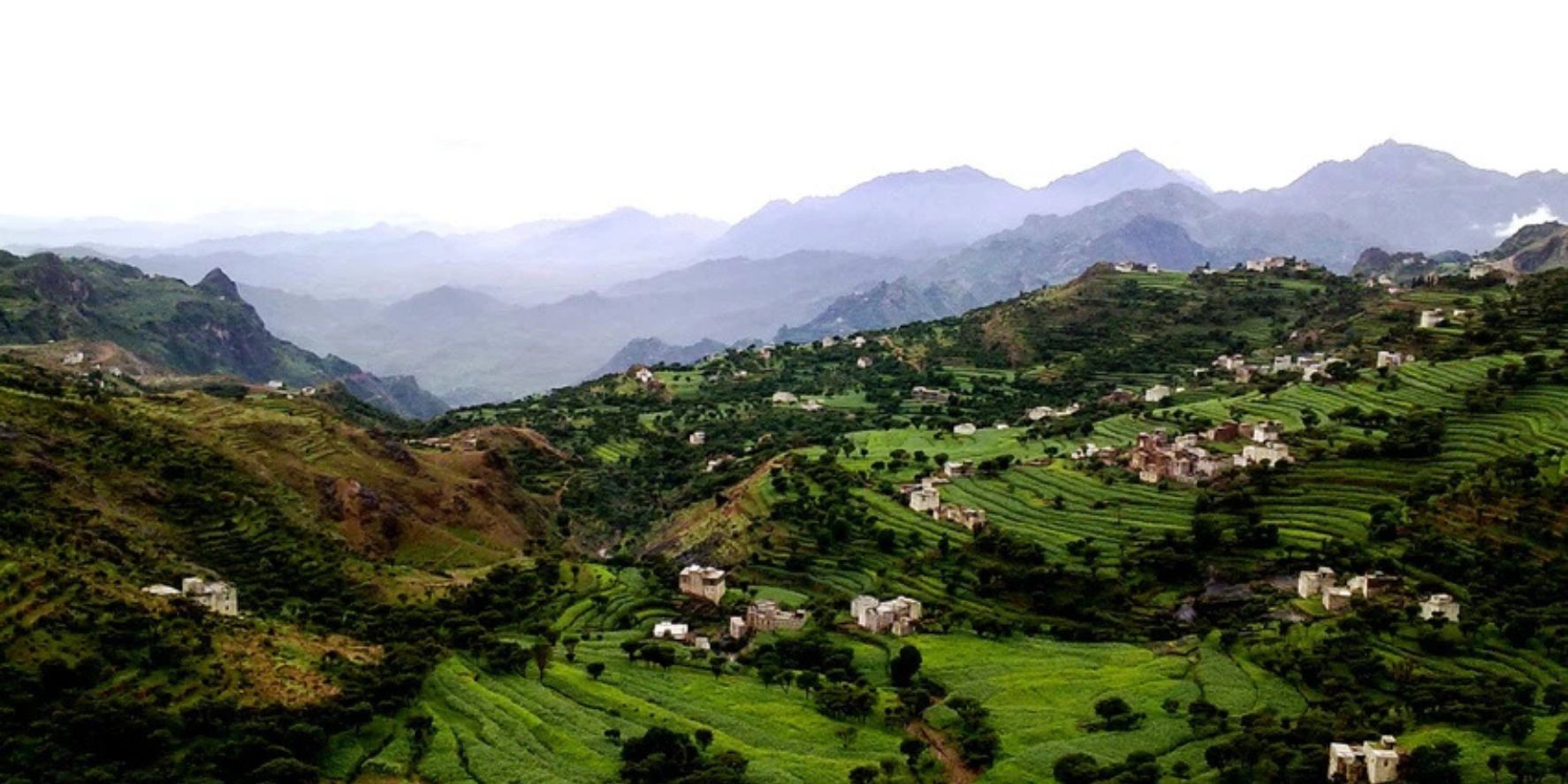
Taiz — city of Yemeni poetry and green highlands — was not only a homeland. It was the first perfumery laboratory he ever entered. In those gardens, he absorbed what no academy could teach: the rhythm of nature as it transforms into scent.
Jasmine at dawn. Frankincense cracking open to release its resin. Myrrh shifting from raw gum to a spirit that dissolves into air. In those early years, his education came not from academic halls but from ancient markets, from daily experiments in blending, from watching raw materials and understanding their distinct personalities.
— Taiz, Where Flowers Are a Daily Language
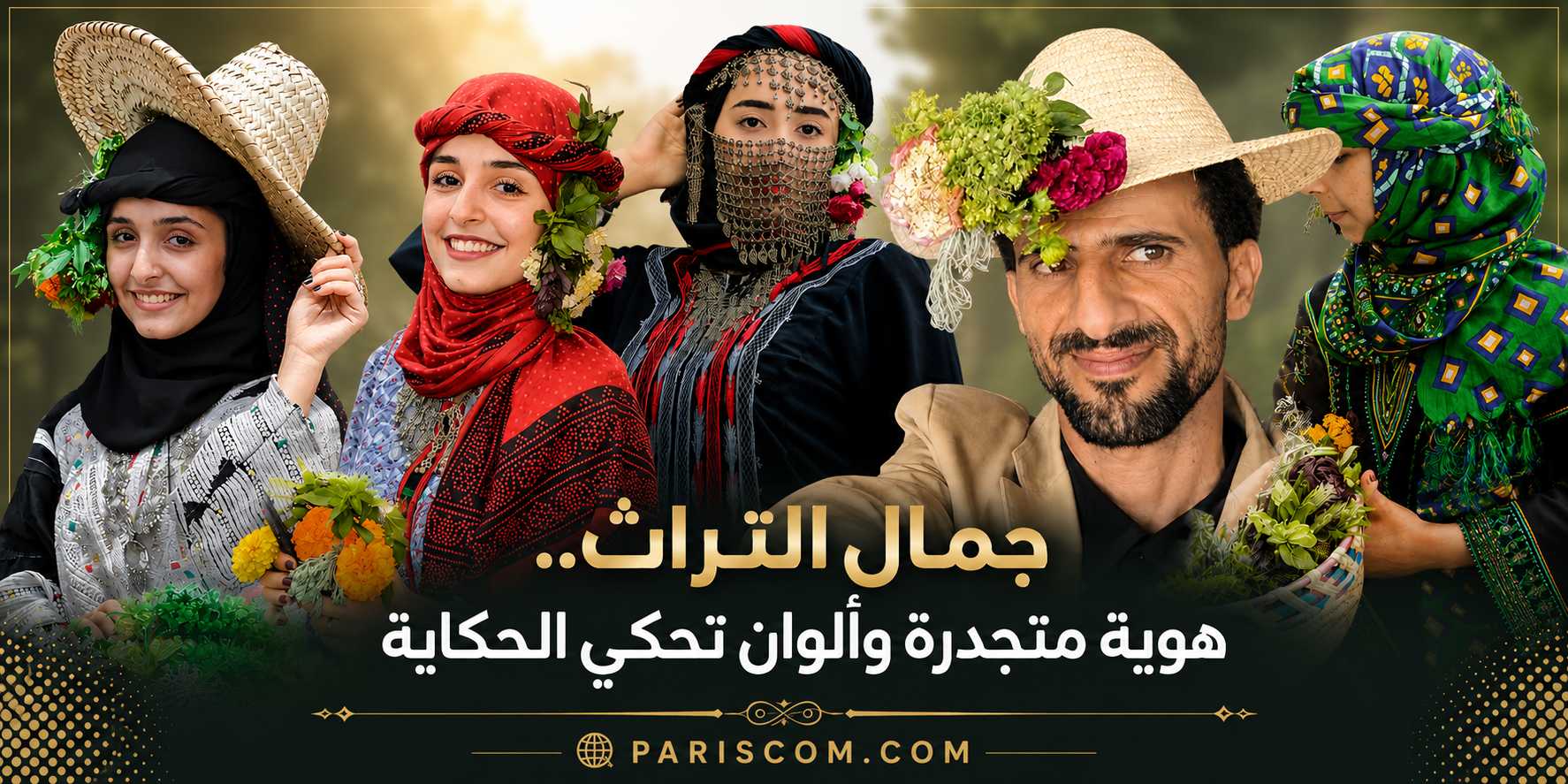
To understand Habib Al-Sowaidi, one must first understand Taiz. Not merely as a city, but as a fragrant world unto itself — a living, pulsating culture where flowers are not merely decoration, but a daily language spoken literally upon people's heads.
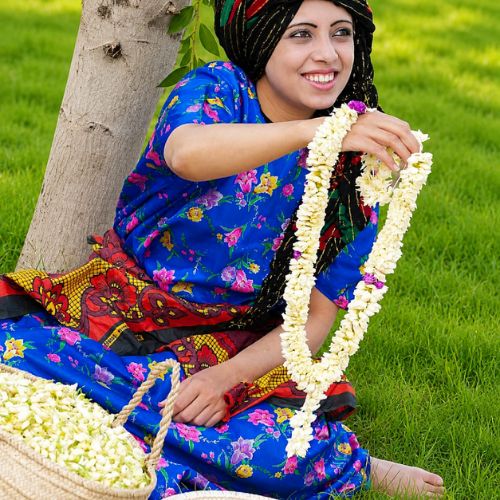
In Taiz, there exists a phenomenon unique in the world — the "Mashaqqir": a headband woven from fresh flowers worn daily by men and women alike. Not fashion, not a special occasion, but a daily ritual deeply rooted in Taizi identity. Fal, jasmine, roses, and basil flowers — blossoms that transform the head of their wearer into a moving bouquet perfuming everything it passes.
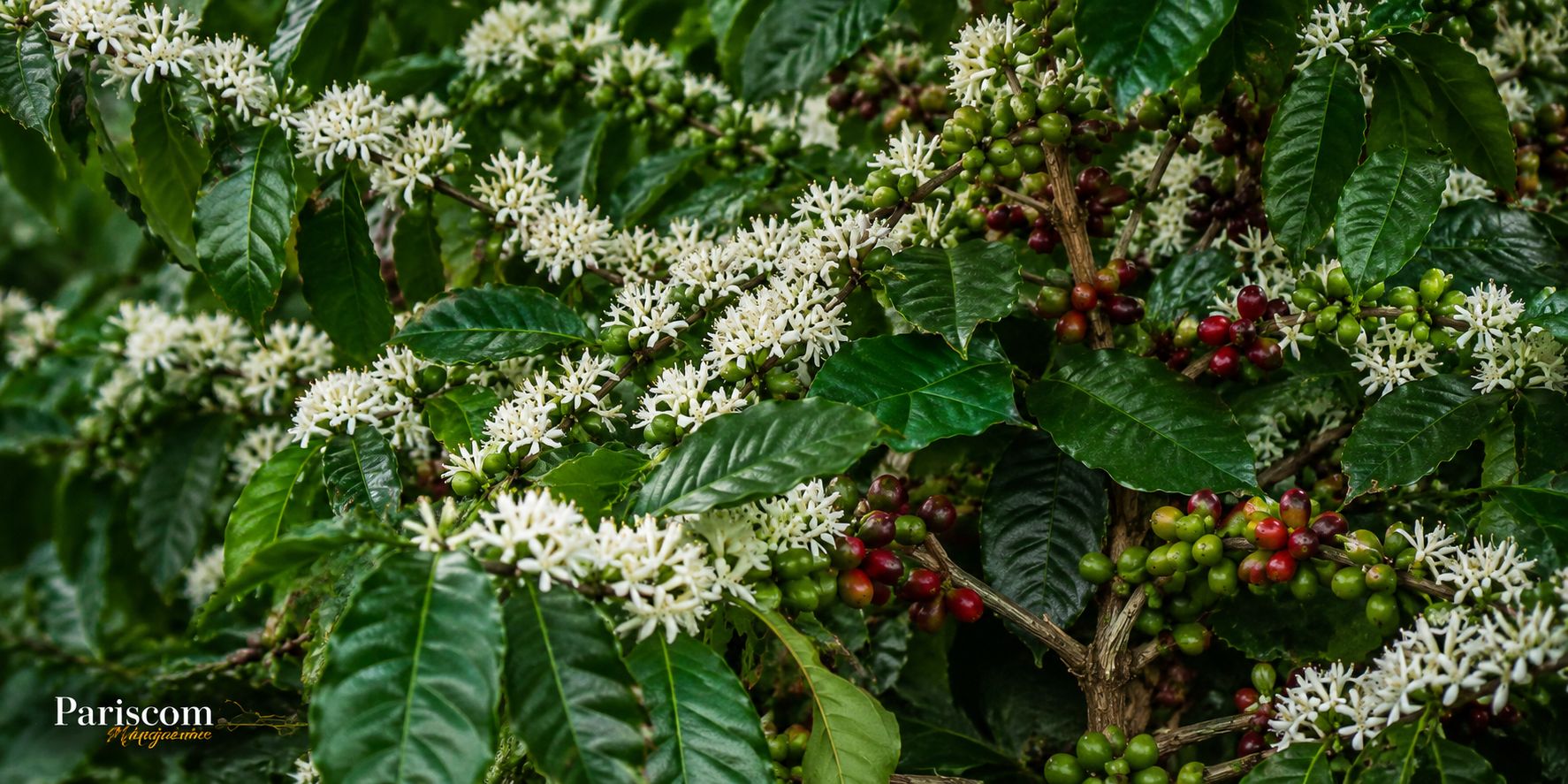
The Flowers of Taiz: Fal (Arabian Jasmine), Sambac Jasmine, Jouri (Red Rose), Basil, Coffee Blossom, Orange Blossom and Kadi.
"In Taiz, you do not need to enter a garden to smell the flowers. The garden walks with you down the street, sits beside you in the café, and sleeps on your pillow every night."
And if flowers are Taiz's visible face, then frankincense and myrrh are its deep soul. In the ancient markets, lumps of frankincense are stacked like precious stones, and myrrh exhales its dark, strange depth.
— Saudi Arabia, Where Knowledge Became Mastery
If Yemen gave Habib Al-Sowaidi his first passion for fragrances and their raw materials, the Kingdom of Saudi Arabia was the station where that knowledge transformed into broad professional experience.
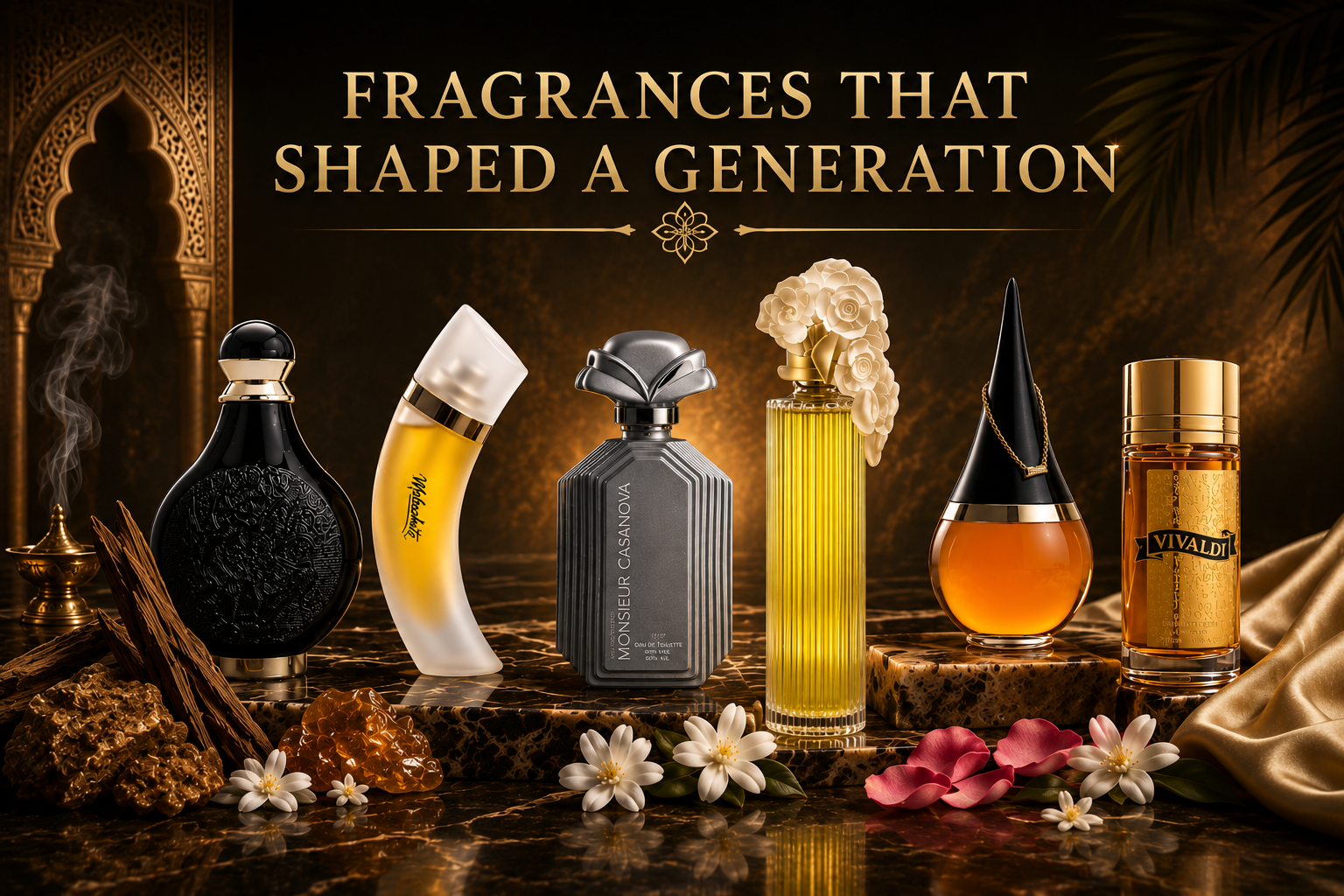
There, he took the helm at Mahmoud Saeed Perfumes, one of the region's most prominent fragrance manufacturers of that era — a chapter that witnessed his evolution from a connoisseur of aromatic materials to a product developer and creative production leader. Among his most celebrated creations during this period was the Casanova fragrance series, which achieved wide distribution across Arab markets.
During those years, his name grew beyond the corridors of the fragrance industry. He earned the trust of the late King Fahd bin Abdulaziz, who called upon his expertise to develop and craft royal private fragrances.
His involvement extended to collaborations with leading regional brands including Dar Dara'a, and celebrity fragrance projects with Arab music legend Mohammed Abdo, Lebanese TV presenter Georges Gordahi, and Rotana artists including Kazem Al-Saher, Rola Saad, and Majid Al-Mohandis — demonstrating an early and prescient grasp of the celebrity fragrance concept long before it became the global phenomenon it is today.
— The Man Behind the Curtain
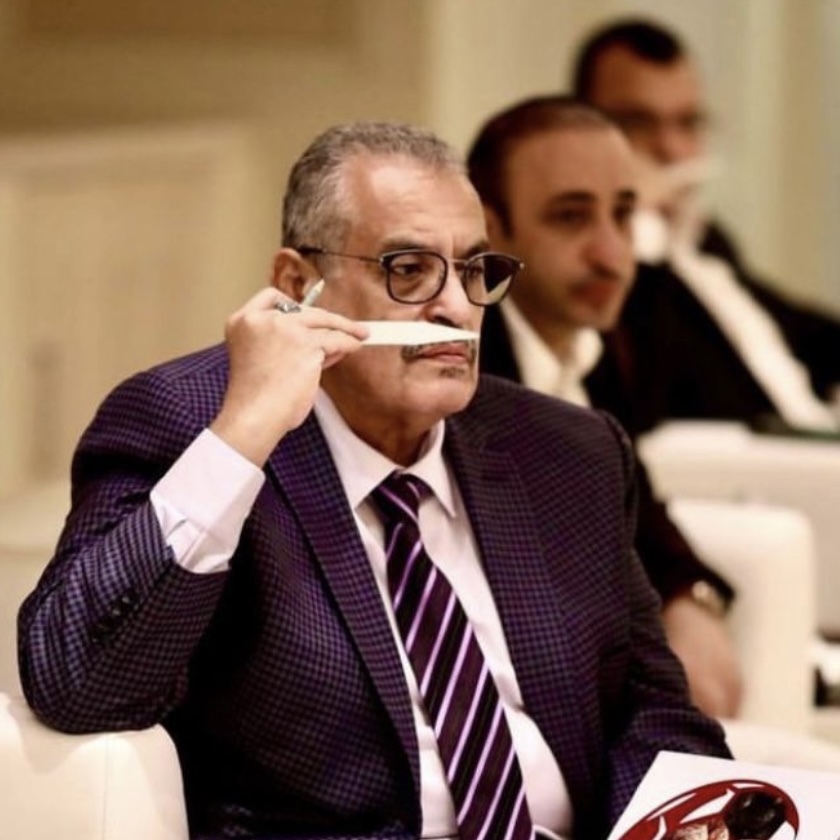
Despite his name remaining largely unknown to the wider public, Habib Al-Sowaidi was, for decades, one of the recognised figures within the fragrance industry itself. While brand names commanded the advertising spotlight, he worked in the background — developing products, building olfactory concepts, and collaborating with master perfumers, designers, and decision-makers across this rarefied sector.
This professional trajectory allowed him to build an expansive network within the global fragrance world, and to move between Middle Eastern markets and the corridors of European perfumery with a confidence and expertise spanning decades.
— Serge Mansau, The Alliance of Two Legends
In the world of fragrance, the perfume is made inside the bottle, and born outside it. A great bottle does not contain a fragrance — it contains a dream.
No account of Habib Al-Sowaidi can pass without pausing at his relationship with the legendary French sculptor and designer Serge Mansau (1930–2019) — one of the greatest artists of the twentieth century in the history of fragrance bottle design.
Over a career spanning more than six decades, Mansau designed more than three hundred fragrance bottles. His client list reads like a dictionary of global luxury: 24 Faubourg and Eau des Merveilles for Hermès; Organza, Pi, and Amarige for Givenchy; Climat for Lancôme; Flower by Kenzo; Insolence for Guerlain; Narciso Rodriguez For Her; Dolce Vita for Dior; Giò for Armani.
"Genius is childhood recovered at will." — Serge Mansau
This is the man Habib Al-Sowaidi chose to design the bottle for Reine de Saba. Not by chance — but by the deliberate selection of a man who understands that a bottle must be a masterpiece before it is a vessel.
— Dominique Ropion, A Partnership Beyond the Perfume
There are professional relationships that transcend contracts and become civilisational partnerships. The relationship between Habib Al-Sowaidi and Dominique Ropion — creator of La Vie Est Belle for Lancôme, Alien for Mugler, Carnal Flower for Frédéric Malle, and Portrait of a Lady — is a model of what mutual trust builds when two exceptional minds meet.
Their acquaintance began when the French perfumer Jean-Louis Sieuzac introduced them. Habib was working at the time with Al Jazeera Perfumes. From that initial encounter was born Aksoum — a fragrance Ropion created for the Reine de Saba collection, which he named "the fruit of love."
When Dominique Ropion decided to launch his own brand — the project of his lifetime — his first supporter and partner was Habib Al-Sowaidi, founder of Le Royaume du Parfum International.
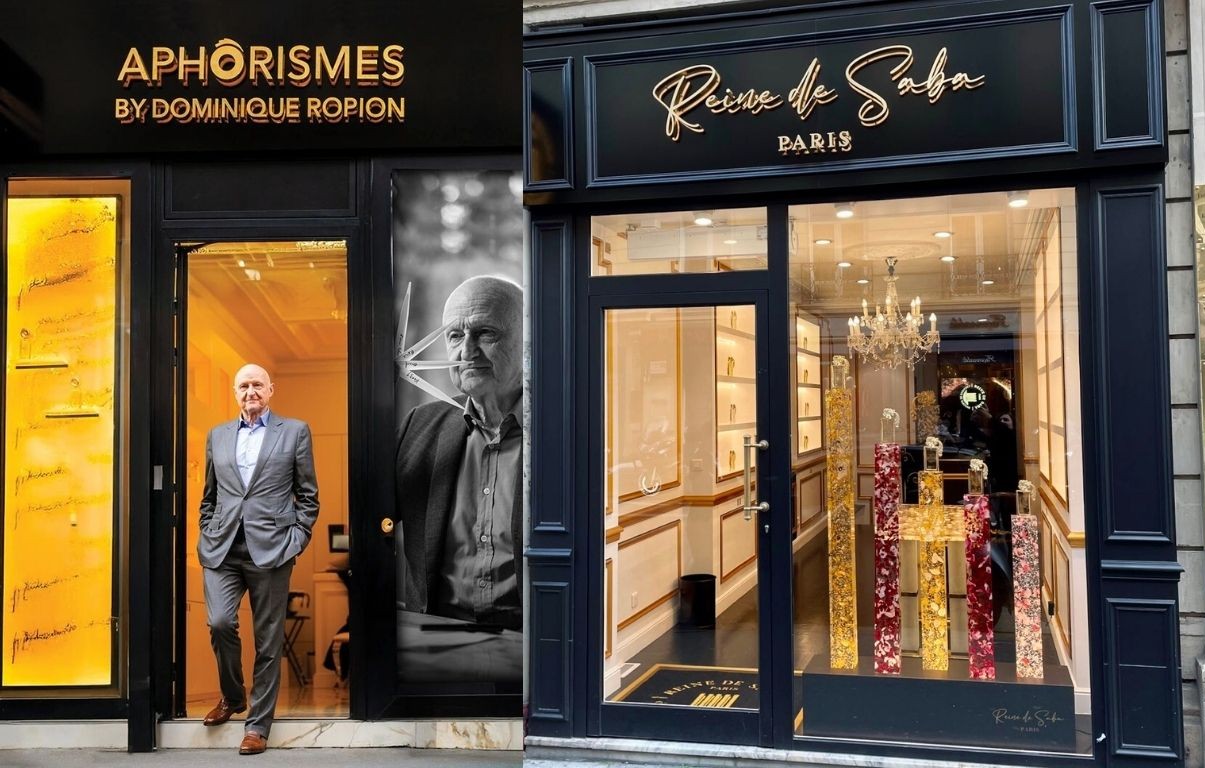
One Street — Two Legacies: Reine de Saba boutique at 24 Rue Marbeuf, 8th arrondissement, Paris; Aphorismes by Dominique Ropion boutique at 27 Rue Marbeuf — directly opposite. One man behind both boutiques.
— The Scholars Who Gave Reine de Saba Its Soul

He chose Professor Annick Le Guérer — one of France's foremost researchers in anthropology and the history of fragrance. Her role was not ceremonial. She participated in building the intellectual foundation of the Reine de Saba project — documenting the historical backgrounds of the raw materials and symbols used in the collection.
Alongside her, Dr. Mohammed Al-Hajj — member of the Yemeni Antiquities Committee at UNESCO — ensured that every element of Reine de Saba passed through the hands of an expert who does not compromise on authenticity.
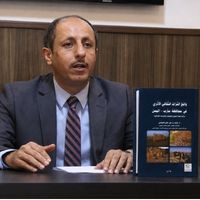
"We dug deep into history and it was indescribably exciting. I hope the experience of these fragrances carries the same sense of wonder." — Habib Al-Sowaidi, Fragrantica 2023
— Reine de Saba, The Dream That Waited Twenty-Six Years
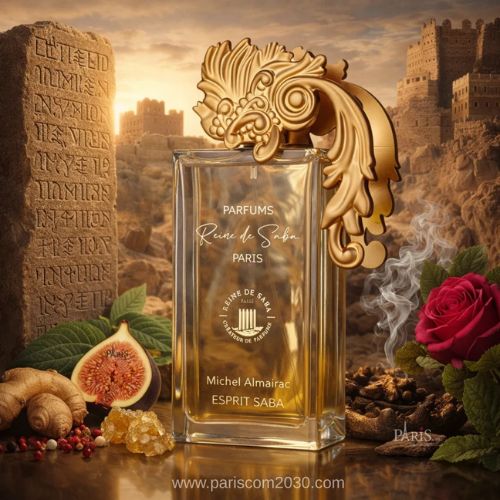
In 2022, Habib Al-Sowaidi stood in the heart of Paris to announce a project he had been contemplating since 1996. Twenty-six years of waiting were not wasted time — they were years spent building the tools.
The concept was revolutionary in its quiet ambition: to transform the civilisational heritage of Yemen into a fragrance bottle sold in the world's most exclusive stores.
The bottle is inspired by the throne of Bilqis, Queen of Sheba. Its cap recalls the crown of Solomon's hoopoe. The box is adorned with engravings in Al-Musnad — the ancient South Arabian script. The house's message: every bottle carries a message of peace, and every fragrance declares that love, friendship, and beauty know no borders.
Aksoum — inspired by the Queen's journey to Ethiopia, created by Dominique Ropion, named "the fruit of love." Balqis — a tribute to the femininity of the Queen of Yemen. Amber Saba — a salutation to the incense and amber of ancient Arabia. Etoile de Saba — the kingdom's starlit night, written in white flowers. Salalah — a homage to the Frankincense Road of southern Arabia. Saba Désert 2026 — a journey through sacred sands and ancient silence. Palais de Saba 2026 — Palace of Sheba, a tribute to Bilqis's legendary throne.
— Ybry Paris, The Legend of Gilded Times Returns
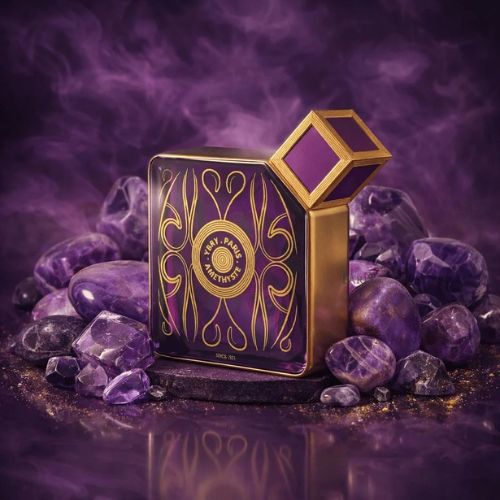
Ybry Paris is a historic French luxury fragrance house founded in 1925 in Paris, conceived as a unique dialogue between art, perfumery, and jewellery. Its founder, Simon Yaroslavsky, built his philosophy on presenting "the world's most expensive fragrances" as objects akin to fine jewels.
The Great Depression of 1929 destroyed everything. The house closed in France in 1933. Then — silence. For decades, the name seemed a forgotten page in the history of French perfumery.
In 2025, at the TFWA exhibition in Cannes, Ybry returned with a new chapter but an ancient soul: fragrance as jewel, and jewel as fragrance. Seven fragrances: Rubis (Ruby), Moissanite, Emeraude (Emerald), Quartz Rose (Rose Quartz), Turquoise, Amethyste (Amethyst), Ambre (Amber).
Two Brands. Two Eras. One Man.
Habib Al-Sowaidi did not create one brand. He built two distinct fragrance houses that speak in different languages while sharing the same foundational conviction: that fragrance is message, memory, and civilisation.
Reine de Saba (Founded 2022 · Paris): Inspired by Yemeni civilisation and the Queen of Sheba. 33 fragrances · 30 international perfumers. Bottle from Queen Bilqis's throne. Cap shaped as Solomon's hoopoe crown. Al-Musnad ancient script engravings. Fragrance as civilisational message and peace.
Ybry Paris (Relaunched 2025 · Cannes TFWA): Founded 1925 · revived after a century. 7 fragrances · 7 precious stones. 7 master perfumers. Inspired by French Art Deco 1925. Fragrance as fine jewellery. The bottle as an independent work of art.
Oman, Where the Journey Returns to Its Roots
Oman is not merely a new market on an expansion map. It is one of the regions most intimately bound to the history of fragrance. For centuries its name has been synonymous with Omani frankincense — the resin that traversed ancient trade routes to reach every corner of the known world.
It is as though the journey that began in the fragrant lands of the East, travelled to the capitals of European perfumery, and now returns home — carrying with it decades of global experience and a vision refined by years of work at the heart of the luxury fragrance industry.
— What Sets Habib Al-Sowaidi Apart from Everyone Else
In the fragrance industry, technical knowledge alone is not enough to make a genuine difference. What is remarkable about Habib Al-Sowaidi's experience is that he never treated fragrance as a consumer product alone, but as a vehicle for transmitting story, identity, and culture.
- Rare Arab figure to build two independent luxury houses in the heart of Paris's 8th arrondissement
- First to systematically combine UNESCO-level historical scholarship with commercial fragrance creation
- Collaborated with Serge Mansau — designer of over 300 iconic bottles for Hermès, Dior, and Guerlain
- Decades-long creative partnership with Dominique Ropion, one of the world's greatest living perfumers
- Revived a historic 1925 French house (Ybry Paris) after a full century of silence
- Pioneered the celebrity fragrance concept in the Arab world long before it became mainstream
A Legacy That Transcends Perfume
The man who began his path between the Mashaqqir flowers and the incense smoke of Yemen found himself, years later, a partner in ventures that left their mark on the global fragrance industry — from a Yemeni capital to the most prestigious arrondissement of Paris.
Between the humble beginnings and the international achievements, one thread runs through every station of the journey: the belief that fragrance is not merely a scent, but a memory, a culture, and a story worth telling.
And for that reason, the story of Habib Al-Sowaidi is more than a successful professional biography — it is testimony to the power of passion, knowledge, and clear vision to cross all borders and create an impact that transcends both place and time.